
Artificial Intelligence in Healthcare: The Future of Medicine is Here
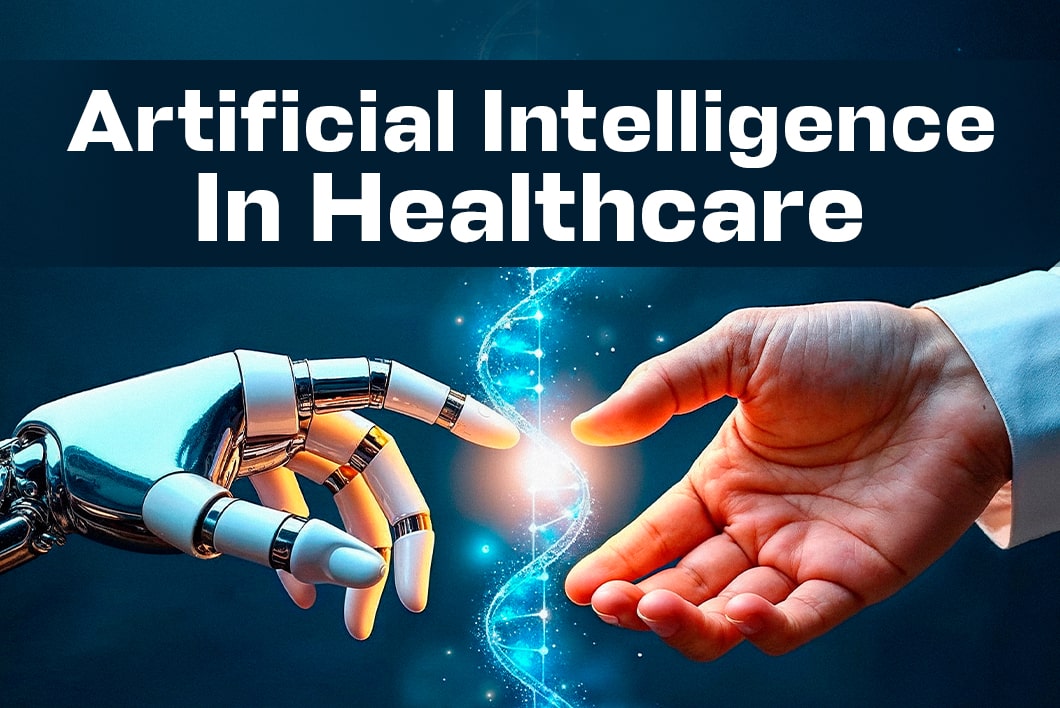
Imagine a world where diseases are detected before symptoms appear, where treatments are tailored to your unique genetic makeup, and where a virtual assistant monitors your health 24/7. This isn't science fiction-it's the reality that artificial intelligence is creating in healthcare today. As we stand at the crossroads of technology and medicine, AI is not just changing how we treat patients; it's redefining what's possible in healthcare.
The AI Healthcare Revolution: What's Happening Now
Healthcare generates massive amounts of data every day-from medical images and lab results to genetic sequences and patient records. For decades, this wealth of information has been underutilized, simply because human minds cannot process it all. Enter artificial intelligence. Machine learning algorithms excel at finding patterns in complex data, making connections that might take humans years to discover, and doing it all at unprecedented speed.
The transformation is already underway. AI-powered systems are reading medical scans, predicting patient outcomes, discovering new drugs, and even assisting in surgeries. What makes this revolution particularly exciting is that we're still in the early stages. The potential for AI to improve healthcare is virtually limitless.
Transforming Diagnosis: AI as the Ultimate Detective
Diagnosis is often compared to detective work-gathering clues, eliminating possibilities, and arriving at the right conclusion. AI is proving to be an extraordinary medical detective. Deep learning models trained on millions of medical images can now identify diseases with remarkable accuracy, often spotting subtle abnormalities that human eyes might miss.
Consider mammography screening. Radiologists examine thousands of mammograms looking for signs of breast cancer, a mentally exhausting task where even experts can miss small tumors. AI systems can analyze these images in seconds, flagging suspicious areas for closer review. Studies have shown that AI can match or exceed human performance in detecting certain cancers, and when AI works alongside radiologists, the combination is more powerful than either alone.
Beyond imaging, AI is revolutionizing pathology. Traditional microscope-based examination of tissue samples is time-consuming and subjective. AI-powered digital pathology systems can analyze slides at scale, identifying cancerous cells, predicting how aggressive a tumor might be, and even suggesting which treatments are most likely to work. This technology is particularly valuable in regions lacking specialist pathologists, democratizing access to expert-level diagnosis.
The impact extends to rare diseases, which often take years to diagnose because doctors may never have encountered them before. AI systems trained on vast medical databases can suggest rare disease diagnoses by matching patient symptoms and test results against thousands of conditions, dramatically reducing the diagnostic odyssey many patients endure.
Drug Discovery: From Decades to Days
Bringing a new drug to market traditionally takes 10-15 years and costs billions of dollars. The process involves screening millions of compounds, testing them in labs and animals, and running extensive human trials. Most candidates fail. AI is transforming this painstaking process by predicting which molecules are most likely to succeed before expensive testing begins.
Machine learning models can simulate how potential drugs interact with their targets in the body, predicting effectiveness and side effects. This computational approach has already led to breakthroughs. AI has identified existing drugs that could be repurposed for new diseases, discovered entirely new drug candidates, and optimized molecules to be more effective with fewer side effects.
One of the most celebrated AI achievements in healthcare came from solving the protein folding problem. Proteins are the workhorses of our cells, and their function depends on their three-dimensional shape. Predicting how a chain of amino acids folds into a complex 3D structure was one of biology's grand challenges. AI models can now predict protein structures with near-experimental accuracy, opening new possibilities for understanding diseases and designing targeted therapies.
The speed of AI-driven drug discovery became particularly evident during recent global health crises, where AI helped identify potential treatments in weeks rather than months, analyze vaccine effectiveness, and predict how diseases might spread.
Personalized Medicine: Your Unique Treatment Plan
No two patients are exactly alike. Genetics, environment, lifestyle, and even gut bacteria influence how we respond to treatments. Yet traditional medicine often takes a one-size-fits-all approach. AI is making truly personalized medicine possible by analyzing the unique characteristics of each patient to predict which treatments will work best.
In oncology, this approach is transforming cancer care. AI systems analyze the genetic mutations in a patient's tumor, compare them against databases of treatment outcomes, and recommend therapies most likely to be effective for that specific cancer. This precision approach improves outcomes while sparing patients from ineffective treatments and their side effects.
For chronic diseases like diabetes and heart disease, AI-powered apps and wearables provide personalized insights and predictions. These systems learn each patient's patterns, predict when problems might occur, and suggest interventions. A diabetic patient might receive a warning that their glucose is likely to spike based on their meal, activity, and historical patterns, allowing them to take preventive action.
Pharmacogenomics—using genetic information to guide drug selection and dosing—is another area where AI excels. Genetic variations affect how we metabolize medications, making some drugs more or less effective for different people. AI can analyze a patient's genetic profile and recommend the optimal medication and dose, reducing trial-and-error prescribing.
Predictive Healthcare: Preventing Problems Before They Start
The most powerful medicine is often prevention. AI's ability to predict future health outcomes is enabling a shift from reactive to proactive healthcare. By analyzing patterns in patient data, machine learning models can identify who is at risk for various conditions, often years before symptoms appear.
Hospital early warning systems use AI to monitor patients continuously, predicting which ones are at risk for serious complications like sepsis, cardiac arrest, or sudden deterioration. These systems give doctors precious time to intervene, saving lives that might otherwise be lost to sudden medical emergencies.
Population health management is being transformed by predictive analytics. Healthcare systems can identify patients likely to develop chronic diseases, target preventive interventions, and allocate resources where they'll have the greatest impact. This approach not only improves health outcomes but also makes healthcare more efficient and affordable.
Wearable technology combined with AI is bringing predictive healthcare into our daily lives. Smartwatches can detect irregular heart rhythms that might lead to stroke, predict falls in elderly patients, and even identify early signs of infections before we feel sick. These consumer devices are turning everyone into active participants in their own health monitoring.
AI in the Operating Room: Precision and Assistance
Surgery demands extraordinary precision, and AI is enhancing surgical capabilities in multiple ways. Robotic surgical systems with AI assistance provide surgeons with steadier hands, better visualization, and the ability to operate through tiny incisions. These systems don't replace surgeons—they amplify their abilities, allowing for more precise and less invasive procedures.
AI is also transforming surgical planning. Before complex operations, surgeons can use AI to analyze medical images, create 3D models of the surgical site, and simulate different approaches. Machine learning algorithms can predict potential complications and suggest optimal strategies, helping surgeons prepare for contingencies.
During surgery, AI systems can provide real-time guidance, identifying critical structures like blood vessels and nerves, alerting surgeons to potential problems, and even predicting how long procedures will take. This technology is particularly valuable for training new surgeons, providing them with AI-assisted feedback as they develop their skills.
The Business of Healthcare AI: Opportunities Abound
The AI healthcare market is experiencing explosive growth, creating unprecedented career opportunities. The field needs not just data scientists and machine learning engineers, but professionals who understand both technology and healthcare.
Medical AI companies are developing solutions for every aspect of healthcare, from diagnosis and treatment to hospital operations and patient engagement. Healthcare providers are hiring AI specialists to implement these technologies and improve patient care. Regulatory bodies need experts who understand AI to develop appropriate oversight frameworks. Insurance companies are using AI for risk assessment and fraud detection.
The most exciting opportunities often lie at the intersection of disciplines. A physician with AI expertise can identify clinical problems that technology can solve. A data scientist with healthcare knowledge can build models that truly meet medical needs. A software engineer focused on healthcare can create user-friendly tools that doctors will actually use.
Startups are flourishing in this space, tackling everything from AI-powered mental health support to automated medical coding. Established tech giants are investing heavily in healthcare AI, partnering with hospitals and research institutions. The field offers pathways for researchers pushing the boundaries of what's possible, entrepreneurs building new solutions, and implementers bringing AI into clinical practice.
Navigating Challenges: The Road Ahead
Despite its tremendous promise, AI in healthcare faces significant challenges that must be addressed. Data privacy is paramount—medical information is highly sensitive, and AI systems require vast amounts of data to train effectively. Balancing the need for data with patient privacy requires robust security measures and thoughtful policies.
Bias in AI models is a critical concern. If training data primarily comes from certain populations, AI systems may perform poorly for underrepresented groups. Ensuring AI works equitably for all patients requires diverse datasets and careful validation across different populations.
Regulatory approval for medical AI is complex and evolving. Healthcare is highly regulated for good reason—mistakes can cost lives. AI developers must navigate stringent approval processes while regulators work to create frameworks appropriate for rapidly advancing technology.
Integration into clinical practice presents practical challenges. Healthcare providers are often overwhelmed with technology that doesn't fit their workflow. Successful AI tools must be intuitive, reliable, and genuinely helpful rather than adding to clinicians' burden. Building trust between AI systems and healthcare providers takes time, transparency, and demonstrated value.
The question of liability remains unsettled. If an AI system makes a mistake, who is responsible? The developer, the hospital, or the physician who relied on it? Clear frameworks are needed as AI becomes more autonomous in healthcare decisions.
A Vision for Tomorrow
The next decade will likely bring AI capabilities we can barely imagine today. We may see AI systems that can diagnose hundreds of conditions from a simple blood sample, predict health problems years in advance, and deliver truly personalized preventive care. Gene therapy guided by AI could cure diseases once thought incurable. AI-powered drug discovery might routinely produce new treatments in months rather than years. Healthcare delivery itself will transform. AI-enabled telemedicine could bring specialist-level care to remote areas. Virtual health assistants might monitor chronic conditions continuously, alerting human doctors only when intervention is needed. Operating rooms might become highly automated, with AI systems handling routine aspects of procedures while surgeons focus on complex decision-making.
Perhaps most importantly, AI could make healthcare more accessible and affordable. By improving efficiency, reducing errors, and enabling prevention, AI has the potential to expand quality healthcare to populations currently underserved.
Join the Healthcare AI Revolution
For those considering a career at the intersection of AI and healthcare, the timing couldn't be better. The field needs diverse talents—computer scientists, healthcare professionals, ethicists, policymakers, and entrepreneurs. Whether you're passionate about developing algorithms, implementing solutions, ensuring ethical use, or creating new business models, there's a place for you in this revolution.
The transformation of healthcare through AI isn't just about technology—it's about improving human lives. Every algorithm that detects disease earlier, every model that predicts complications, every tool that helps doctors make better decisions represents real people getting better care. That's what makes this field so compelling and so important.
The future of healthcare is being written now, and you can be part of the story.
Interested in becoming a healthcare AI professional? Discover our programs designed to prepare you for this transformative field where technology meets medicine to improve lives.

 How can I help you?